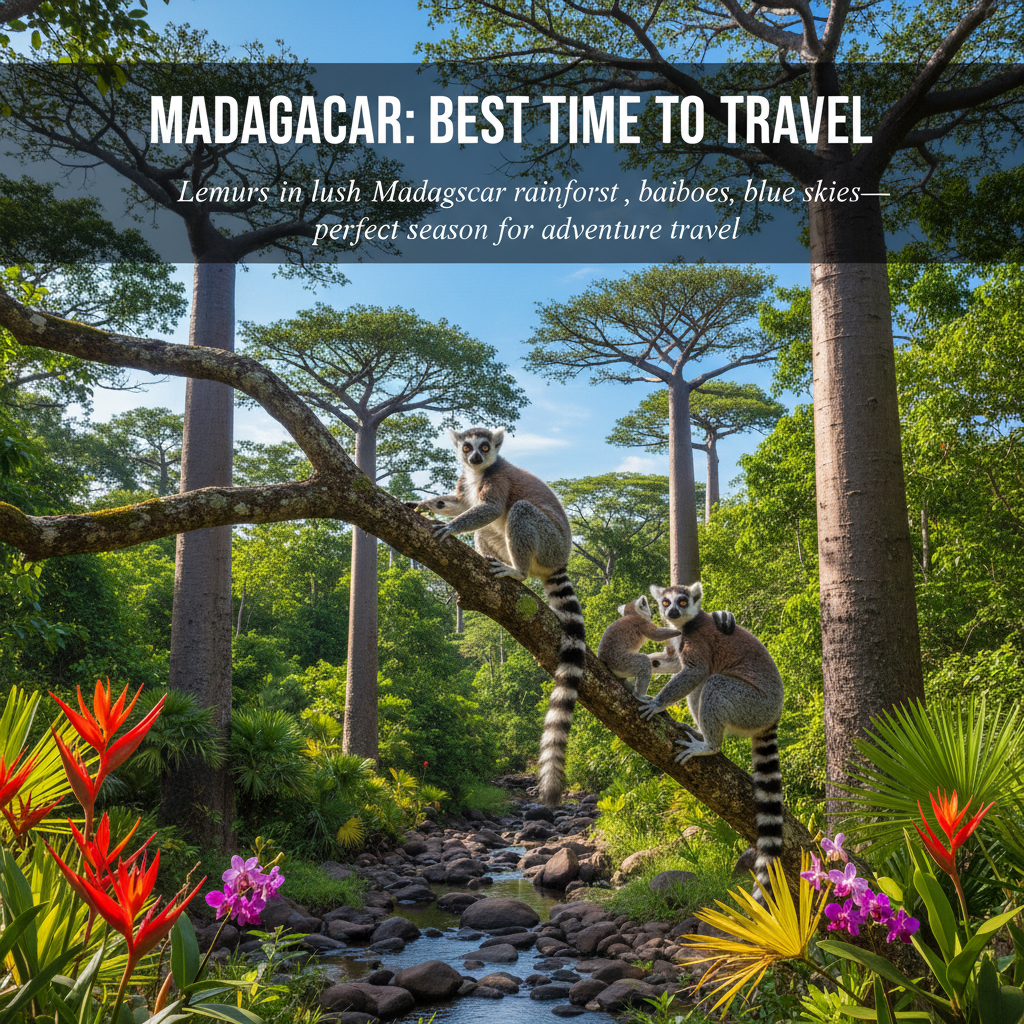
Quick Overview – When Is the Best Time to Travel to Madagascar in 2026?
Madagascar’s Climate: Dry vs. Wet Season Explained
Madagascar’s climate features a warm, rainy wet season (November–March) and a cooler, dry season (May–October). During the wet season, average temperatures range between 22–27°C (72–81°F), while the dry season brings averages of 15–22°C (59–72°F). Rainfall varies dramatically by month and region, with the east coast receiving the most (3,200–3,800mm annually), the northwest 2,100mm, the highlands 1,000–1,500mm, and the southwest only 360mm per year. Cyclones may affect the island, mainly from November to March, with the highest risk along the eastern coast. No region-specific or year-specific (2026) forecast supersedes these historical averages, but the dry season consistently proves optimal for travel.
Updated Traveler Essentials for 2026 (Visas, Restrictions, Health & Safety)
- Visa: Required for all visitors. Available on arrival (up to 30 days, ~115,000 MGA/€35), or via eVisa for 15, 30, or 60 days. Passport must be valid for 6 months past arrival and have at least 2–3 blank pages.
- Health: Yellow fever vaccine required only if arriving from endemic country. Strong malaria precautions recommended. Carry comprehensive travel insurance.
- Restrictions: No cannabis, firearms, or explosives allowed. International driving permit needed. Return/onward ticket required. Minors traveling with one parent need consent from the other.
Month-by-Month Breakdown: Weather, Wildlife & Activities
January–March: Wet Season Challenges & Cyclone Warnings
- Weather: December–February brings heavy rain (up to 310mm/month), high humidity, and average temps 22–27°C. Cyclones are likely in these months, especially in the east.
- Activities: Rural travel is challenging. Some parks and roads become impassable. However, the lush landscapes are vibrant and photogenic.
- Travel Cautions: Closely monitor cyclone alerts. Many beach and diving resorts reduce operations or close.
April–June: Perfect Season for Wildlife and Lush Scenery
- Weather: Rains decrease rapidly. April sees 5.12 inches of rain, with a shift toward the dry season.
- Wildlife: Rainforests are green and active for wildlife viewing, especially lemurs. Park trails are accessible but not crowded.
- Travel Tips: This is a shoulder season with the best mix of low prices and good conditions. National parks are ideal for hiking and wildlife walks.
July–September: Peak Lemur, Whale-Watching, and Festivals
- Weather: Dry, cool (15–22°C). Lowest rainfall and most sunshine. Comfortable for all outdoor activities.
- Wildlife: Best for lemur spotting and peak humpback whale watching (Île Sainte-Marie, Nosy Be). Whale Festival in July enhances the experience.
- Festivals & Events: Independence Day (June 26), Whale Festival (July).
- Booking: This is the high season; book accommodation and tours several months in advance.
October–December: Shoulder Season, Fewer Crowds & Late Rainfall
- Weather: Warming up (up to 27°C), early onset of the wet season in November. Rain increases steadily in December.
- Wildlife: Good visibility for many animals, including lemurs. Birdwatching is excellent.
- Travel Tips: Lower crowds and moderate pricing. Limited rainfall means parks are generally open until mid-December.
Madagascar by Interest: When to Go for Your Dream Trip
Best Time to Visit Madagascar for Wildlife Enthusiasts
- Lemurs: Most active during the shoulder seasons—April–June and October–November—when forests are wet but accessible.
- Whales: July–September is peak for humpback whale watching; November is best for rare Omura’s whales.
- Birds: Endemic birds are easiest to spot after the rains (April–June) and again from October–November.
Madagascar for Adventure Seekers: Hiking, Diving & Surfing Seasons
- Hiking: Dry season (May–October) for Isalo, Andasibe, and Tsingy de Bemaraha. Cooler, drier trails.
- Diving: July–December is optimal, especially near Nosy Be and Ifaty.
- Surfing: Beaches on the southwest are best May–October, with consistent swells and sunny days.
Budget Travelers: Cheapest Times to Visit Madagascar
- Shoulder seasons (April–June, September–November) offer 25–40% lower accommodation rates and more negotiable tour prices.
- Expect daily budgets of $30–50 USD (hostels and local food), with 2-week itineraries possible for under $1,500 USD.
- Book flights and hotels locally for best prices; avoid domestic flights when possible to cut costs.
Culture & Events: Madagascar’s Festivals Calendar
| Month | Event |
|---|---|
| January | New Year’s Day |
| March | International Women’s Day, Martyrs’ Day, Eid al-Fitr (tentative) |
| April–May | Easter Weekend, Labor Day, Ascension Day, Eid al-Adha (tentative) |
| June | Independence Day (June 26) |
| August | Assumption of Mary |
| November | All Saints’ Day |
| December | Christmas |
Regional Insights: Where to Go & When in Madagascar
North (Nosy Be, Diego Suarez): Best Months for Beaches and Diving
The north enjoys pleasant conditions nearly all year, with the dry season (May–October) favoring beaches and islands like Nosy Be. Whale watching at Île Sainte-Marie begins in July. Diving and snorkeling visibility is highest July–December.
East (Andasibe, Tamatave): Rainforest Adventures and Lemur Spotting
Visit May–October to avoid heavy rains and increase hiking safety. Lemur and bird visibility peaks in April–June and October–November, following the rains when forests are alive with activity.
South & West (Toliara, Morondava): Road Trips, Baobabs & Dry Heat
Western and southern Madagascar are reliably dry May–October, offering year-round road trips. The Avenue of the Baobabs is most photogenic post-rainy season (April–June). Avoid travel December–February due to high temperatures and cyclone risk.
New in 2026: Travel Updates, Accessibility, and Health Tips
Latest Infrastructure Developments & Transportation Advice
- The new $1 billion Antananarivo–Toamasina highway cuts travel time from 16 to ~3 hours. Prioritize this corridor for logistics-heavy itineraries or to reach the coast fast.
- Antananarivo’s Orange Line cable transport (TPC) improves city mobility.
- Regional solar and electricity projects expand rural access, especially in the south.
- Expect seamless connections between the capital and major attractions, along with increased capacity for air and sea arrivals at Toamasina port.
Seasonal Health Considerations (Malaria, Dengue, Vaccinations)
- Vaccinations: All travelers should have Hepatitis A/B, and routine boosters. Rabies and typhoid recommended for longer or remote visits. Yellow fever required only if traveling from endemic regions.
- Malaria: Present countrywide (except Antananarivo)—use antimalarials and mosquito protection. Risk peaks after rains (January–April).
- Dengue: Present; mosquito avoidance is key.
- General: Only drink bottled water; avoid raw produce and undercooked food. Bring a first aid kit and have emergency clinic contacts.
Accommodation Availability and Booking Strategies by Season
- Peak season (July–September): Luxury and mid-range lodges often fill up 5–6 months in advance. Book early for best options.
- Shoulder season: More rooms available at lower prices; walk-in bookings possible in most regions but advisable to secure places at popular parks/beaches in advance.
- Off-season (January–March): Many accommodations close in cyclone-prone regions; book in central or highland cities instead.
- Check real-time hotel availability in Madagascar
Responsible Travel and Conservation Efforts in Madagascar
- Community-based ecotourism and wildlife protection programs are expanding, with over 12 new large conservation projects launched or planned in 2026.
- Forest restoration: Over 7 million new trees planted across priority corridors.
- Marine protections: Several new marine parks safeguard turtles, whales, and reefs while offering low-impact visitor experiences.
- Participate in citizen science (lemur/bird counts) via select ecotours.
- Support local businesses and guides to maximize community benefit.
FAQs: Planning the Perfect Madagascar Trip in 2026
- Q: When should I book my Madagascar trip for best value?
- A: Book flights/accommodation for the shoulder season (April–June, September–November) to balance cost and comfort.
- Q: Which vaccinations are mandatory or recommended for 2026?
- A: Yellow fever (if traveling from endemic regions), Hepatitis A/B, routine boosters; typhoid and rabies for rural trips.
- Q: Which regions are safest for solo or family travelers?
- A: The north (Nosy Be, Diego Suarez) during the dry season; central highlands for cultural tourism year-round; always use reputable guides and avoid isolated rural areas during cyclone season.
- Q: Can I travel independently or should I book a tour?
- A: Independent travel is possible with good planning and French language skills. For rural areas, wildlife tours, or multi-region trips, local operators and private guides can simplify logistics and enhance safety.
- Q: What are the top three must-see highlights?
- A: Avenue of the Baobabs (west), Andasibe-Mantadia National Park (east, lemurs), Nosy Be/Île Sainte-Marie (north, beaches and whales).
- Find and compare Madagascar tours for any style and budget