Quick Glance – Best Time to Visit Kerala in 2026
Top 3 Travel Windows for Kerala in 2026
- October to March: Prime season with pleasant weather (20–32°C), minimal rainfall, and ideal for all experiences.
- Shoulder Months (February, November): Moderate crowds, 20–30% savings, perfect for houseboats and culture.
- Monsoon Ayurveda Season (June–September): Lush landscapes, lowest prices, suited for wellness retreats despite heavy rains.
Quick Chart – Kerala Weather, Rainfall & Temperature by Month
| Month | Avg Temperature (°C, min-max) | Rainfall (mm, avg) | Quick Notes |
|---|---|---|---|
| January | 22–32 | 20–50 | Dry, sunny, post-monsoon clarity |
| February | 23–33 | 10–30 | Driest, best for outdoors |
| March | 24–34 | 30–60 | Warming, low rain |
| April | 25–35 | 70–120 | Hot, humid, pre-monsoon |
| May | 26–36 | 150–250 | Hottest, showers increase |
| June | 24–32 | 400–700 | Onset of monsoon, heavy rain |
| July | 24–31 | 500–800 | Peak monsoon, lush surroundings |
| August | 24–31 | 300–600 | Wettest, landslides possible |
| September | 24–32 | 200–400 | Monsoon receding |
| October | 23–33 | 100–250 | Transitional, skies clear |
| November | 22–32 | 50–150 | Pleasant, some showers |
| December | 21–31 | 30–80 | Cool, festive, humid |
Kerala’s Seasons Explained: Pros & Cons for Travelers
Kerala in Winter (November to February)
- Pros: Best weather, clear skies, perfect for all outdoor activities and sightseeing, vibrant festivals.
- Cons: Peak crowds (80–100% occupancy rates), higher costs (by up to 50–100%).
Kerala in Summer (March to May)
- Pros: Fewer tourists, discounts (30–50%), ideal for budget travel, Ayurveda retreats.
- Cons: Hot (up to 36°C), humid, limited beach activities due to temperature.
Kerala in Monsoon (June to September)
- Pros: Lush greenery, Ayurveda treatments at their best, dramatic landscapes, rates up to 70% lower.
- Cons: Frequent heavy rain, travel disruptions, some trekking/hill areas risk landslides.
Offbeat Experiences by Season
- Winter: Tea plantations in Munnar, wildlife spotting in Periyar.
- Summer: Quiet beaches and spa packages, cultural immersion.
- Monsoon: Wellness tourism, photography, rural stays.
Best Time to Visit Kerala by Experience Type
Best for Houseboats & Backwaters
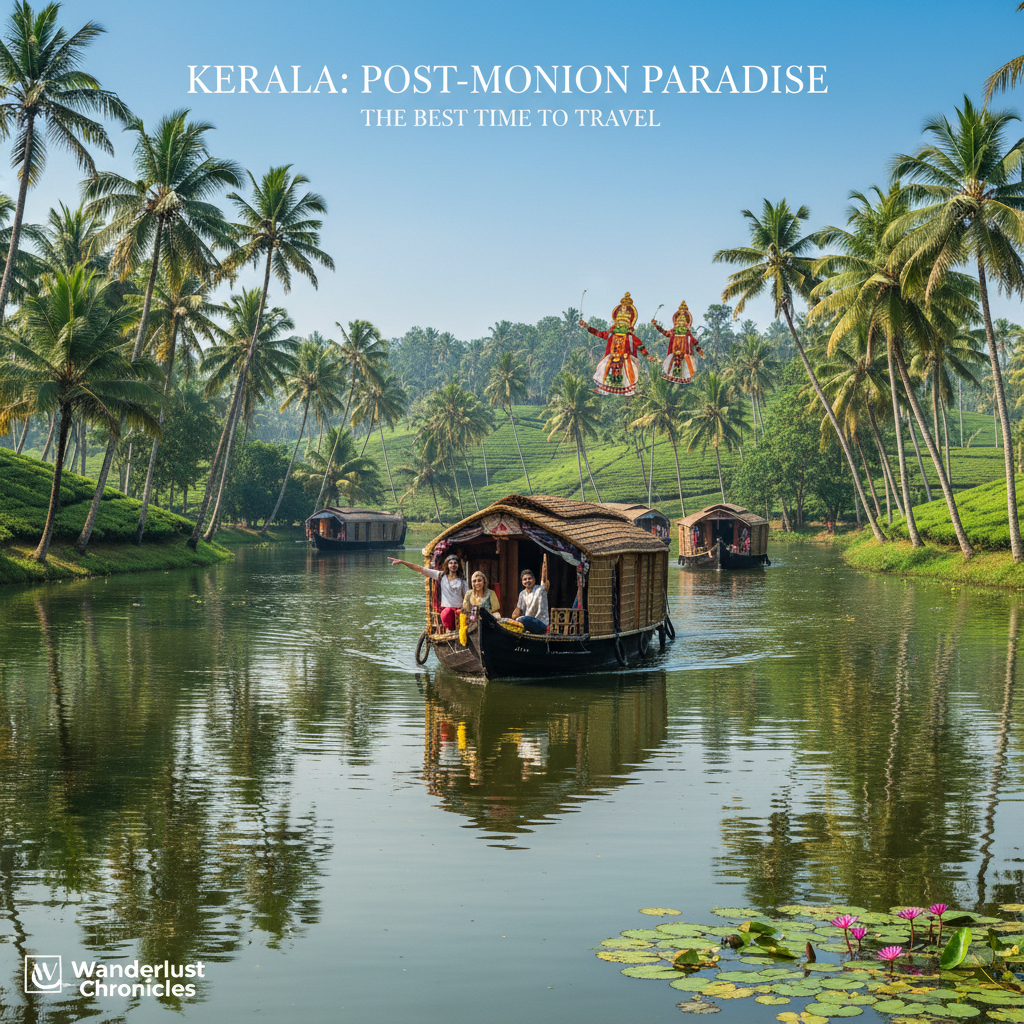
October to March is optimal for houseboat stays in Alleppey and Kumarakom; monsoon months carry flood risk and high waters.
Best for Hill Stations
November to May for exploring Munnar and Thekkady, with temperatures between 15–25°C and clear visibility. Avoid monsoon due to landslides and roadblocks.
Best for Beaches & Coastal Activities
October to March offers calm seas, warm temperatures, and safe swimming in Kovalam and Varkala. Be cautious during summer heat and monsoon sea surges.
Best for Wildlife & Nature
Wildlife reserves like Periyar and Wayanad are best from December to March, with dry trails and frequent animal sightings. Monsoon can limit accessibility and viewing.
Festival Calendar – Kerala’s Must-See Events (2026)
Major Festivals & Dates for 2026
- Onam (Aug 28–Sep 5): Kerala’s grandest harvest festival, known for Vallam Kali (boat races), pookalam (floral carpets), and cultural shows. Expect crowds and price surges.
- Thrissur Pooram (May 3–4): Iconic temple festival with elephant processions and fireworks, held in summer heat.
- Vishu (Apr 14): Malayalam New Year, marked by rituals and family gatherings.
- Christmas & New Year (Dec 25–Jan 1): Western coastal Kerala comes alive with beach parties and gala events.
- Kerala Pirate Festival (February, Kochi): A new tourism event, growing in popularity.
Unique Local Celebrations by Month
- January: Attukal Pongala, Kozhikode Malabar Mahotsavam
- April: Pooram festivals, Vishu
- June–July: Monsoon-linked temple rituals
- August–September: Boat races, Onam
- October–December: Thrivathira (women’s festival), Christmas carnivals
Month-by-Month Guide to Visiting Kerala in 2026
January–March: Top Experiences & Major Events
- Dry and cool, perfect for exploring hills, backwaters, and beaches.
- Cultural festivals and temple events abound.
- Peak foreign visitor arrivals—book in advance.
April–June: Summer Getaways & Hidden Gems
- Heat increases—ideal for Ayurveda, wellness, offbeat rural escapes.
- Best deals on accommodation; major temple festivals in April, like Vishu and Pooram.
July–September: Monsoon Magic & Ayurveda Season
- Spectacular lush scenery, best for Ayurvedic therapy and photography.
- Monsoon boat races and Onam festivities peak in August–September, despite travel slowdowns.
October–December: Culture, Nature & Festivities
- Rain tapers off; weather cools.
- Crowds grow after October’s shoulder season; major holidays drive prices up.
- Beach festivals and cultural shows expand.
Kerala Weather & Climate: What to Expect When You Travel
Detailed Rainfall & Temperature Chart (2026 Forecast)
| Month | Avg Temp (°C) | Rainfall (mm) | Humidity (%) |
|---|---|---|---|
| January | 22–32 | 20–50 | 60–80 |
| February | 23–33 | 10–30 | 60–70 |
| March | 24–34 | 30–60 | 65–70 |
| June–August | 24–32 | 500–800 | 80–95 |
| September–December | 21–33 | 50–400 | 75–90 |
How the Climate Impacts Travel Activities
- Heavy monsoon affects trekking, driving, and beach access—plan accordingly.
- Cool, dry days (Oct–Mar) favor sightseeing, outdoor sports, and wildlife exploration.
- High humidity in shoulder or late monsoon periods; pack light, breathable fabrics.
Budget & Crowd Levels: Finding Kerala’s Sweet Spot for Travel
- Peak season (Dec–Jan): Houseboats ₹20,000+/night, resorts at premium; occupancy 80–100%.
- Shoulder months: 20–30% savings, easier bookings, occupancy 50–70%.
- Monsoon and summer: Up to 70% discounts, occupancy below 40% (budget stays ₹2,000–5,000/night).
- 2026–27 Kerala tourism budget increased by 7% (₹4.13 billion), promoting new offbeat circuits and improving infrastructure, which may help stabilize costs.
Local & Expert Insights – What Travelers Should Consider in 2026
- 2026 brings increased global attention—Kerala ranked #16 in Rough Guides’ top 26 destinations, expect higher demand in traditional hotspots.
- Sustainable tourism focus: Eco-trails, community-run stays, slow travel, especially in emerging areas like Dharmadam and Kollam.
- Book accommodations early for winter or festivals; consider homestays for authenticity and direct community support.
- Monitor India Meteorological Department and Kerala Tourism updates, as monsoon patterns may see 5–10% increased rainfall due to climate unpredictability.
FAQ: Planning Your Kerala Trip in 2026
- Is winter still the best time to visit Kerala? Yes, for weather and experiences. Book early for January festivals or December holidays.
- Is Kerala crowded in 2026? Anticipate higher crowd levels than previous years during winter/festivals due to global recognition and new circuits.
- What’s the cheapest time to visit? Monsoon (June–September) and summer (March–May) offer the lowest prices, but with weather tradeoffs.
- Are there any must-book-in-advance activities? Houseboats, wildlife safaris, and festival events should be booked 3–6 months in advance.
- How reliable are 2026 climate forecasts? Patterns align year-to-year, but closely monitor IMD advisories due to potential monsoon shifts.
- Where to book Kerala experiences? Trusted sites:
Ready to plan your Kerala adventure? Book early to secure your spot during the best time to travel. Consider sustainable options and stay updated with local forecasts for a responsible and memorable 2026 journey to “God’s Own Country.”