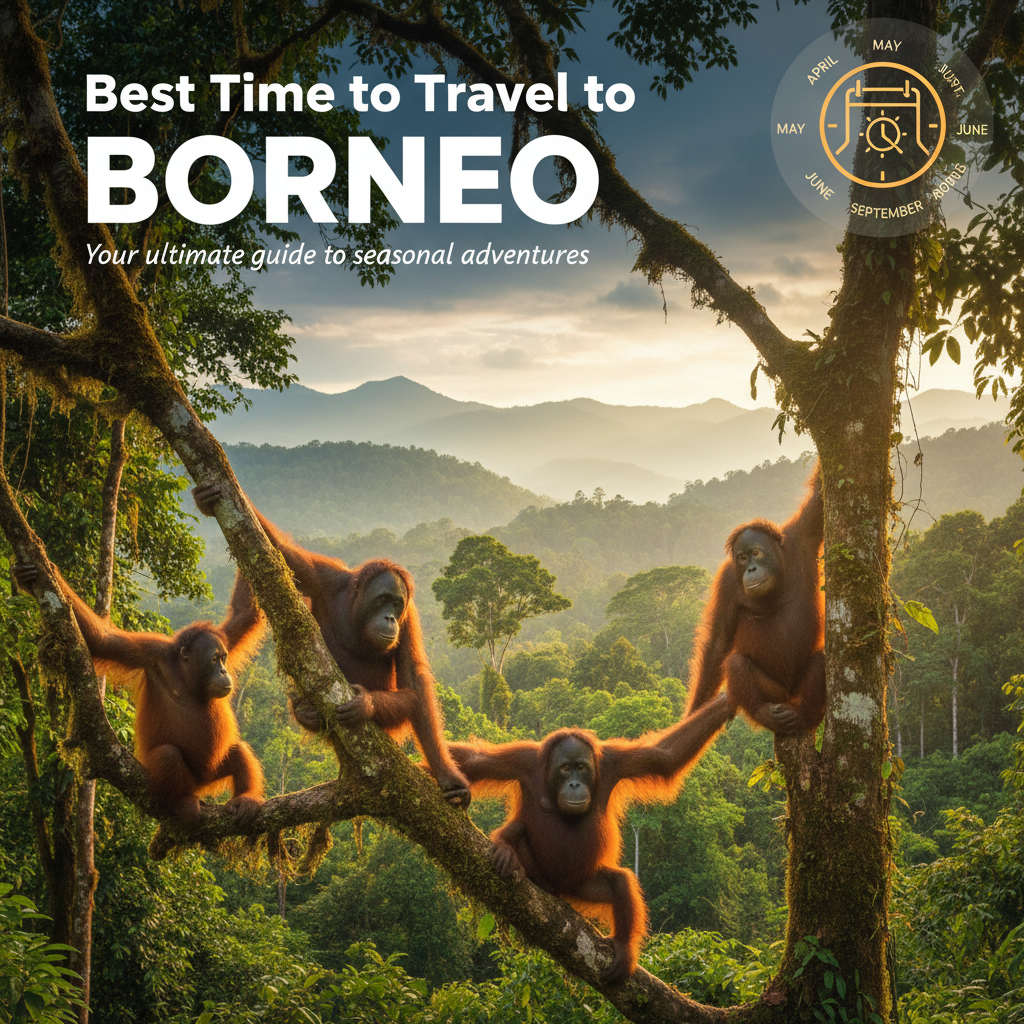
How to Decide the Best Time to Travel to Borneo
Understanding Borneo’s Unique Climate Patterns
Borneo experiences a tropical climate and operates on two main seasons: dry (March–October) and wet (November–February)[1]. While rain can occur at any time, the seasonal distinction directly influences outdoor activities, wildlife encounters, and travel costs. The island’s microclimates vary regionally, especially in Sabah and Sarawak, affecting local experiences.
Seasonal Weather Overview (2026)
- Average Temperatures: 26°C–32°C throughout the year[2].
- Rainfall: Peaks in January & December (~350–480mm/month) and drops to ~120mm in June.
- Humidity: 80–95%, higher in wet season.
2026 weather projections align with recent climate trends, including the dry season offering clearer skies and lower humidity.
Top 7 Reasons to Visit Borneo in Each Season
Dry Season (March–October): Adventures & Wildlife Highlights
- Best conditions for jungle trekking, Mount Kinabalu climbs, and river safaris.
- Prime time for orangutan, pygmy elephant, and proboscis monkey sightings.
- Diving visibility at Sipadan and off Semporna consistently above 20m.
- More predictable ferry/boat schedules for island hopping.
- Lush but accessible national parks and improved infrastructure.
- Peak festivals, such as the Gawai Harvest Festival (June).
- Busiest months: June–September (book 6–12 months ahead).
Wet Season (November–February): Hidden Gems & Lesser-Known Experiences
- Lowest prices on hotels, resorts, and tours – discounts up to 30%.
- Sparser crowds and easier access to guides and cultural experiences.
- Greenest landscapes and heightened river levels benefit photo safaris.
- Turtle hatchings on Selingan Island (especially January/February).
- Traditional festivals, like the Chinese New Year, bring unique events (February).
- Some rougher roads and trails, but main tourist sites (Sepilok, Rainforest Discovery Centre) remain open.
Borneo’s Best Travel Months for Different Traveler Types
Family-Friendly Months: Festivals, Culture & Safe Explorations
- June–August: School breaks, kid-friendly infrastructure in Sabah, English widely spoken[3].
- Gawai Harvest (June) and Kaamatan Festival (May) in Sarawak and Sabah – great for cultural immersion.
- Safety: Sabah and Sarawak considered low-malaria and secure for families.
Solo Traveler Hotspots: Offbeat Times for Discovery
- April–May, September–October: Shoulder season offers balance of favorable weather, moderate crowds, and flexible travel options.
- Kota Kinabalu, Kuching, and Semporna remain vibrant but less packed.
- Volunteer with wildlife projects (orangutans, sun bears) possible year-round.
Eco & Sustainable Travel Windows: Conservation & Green Adventures
- March–May, October: Fewer visitors reduce impact on fragile rainforests and wildlife.
- Wet season’s lower crowds favor responsible, low-impact exploration and citizen science tours.
- Volunteer programs for reforestation and wildlife care are operational throughout the year.
Unique Events & Festivals in Borneo by Month (2026)
Traditional Festivals & Local Celebrations
| Month | Event | Highlight |
|---|---|---|
| May | Kaamatan Festival | Sabah rice harvest with music, dance, and local cuisine. |
| June | Gawai Dayak | Sarawak’s Dayak New Year; cultural open houses. |
| February | Chinese New Year | Fireworks, lion dances in Kuching, Kota Kinabalu. |
| July–August | Rainforest World Music Festival | International gathering in Sarawak cultural village. |
Marine Turtle Season & Rare Wildlife Sightings
- May–September: Turtle nesting on Selingan and Lankayan Islands.
- December–February: Turtle hatching events (book in advance).
- Peak wildlife migration (pygmy elephants): July–September along Kinabatangan River.
Cultural & Nature Photography Opportunities
- Wet season: Dramatic rainforests and river reflections.
- Dry season: Orangutans, proboscis monkeys, clear panoramic mountain and coastal views.
Destination Highlights: When to Visit Borneo’s Top Spots
Sabah: Island Hopping & Mount Kinabalu Climbs
- Best months: March–September for diving, May–August for climbing Kinabalu.
- Popular islands: Gaya, Manukan, and Sapi (accessible year-round, calmer seas in dry season).
- Kinabalu Park entry should be reserved 6 months ahead if traveling June–September.
Sarawak: Rainforests, Rivers & Orangutan Encounters
- Dry season: Ideal for rainforest trekking in Mulu National Park and Semenggoh Wildlife Rehabilitation Centre.
- River safaris and Iban longhouse stays most comfortable March–October.
- Rainforest World Music Festival (July) attracts global travelers.
Lesser-Known Islands & Emerging Eco-Destinations
- Mataking, Pom Pom, and Kapalai—best visited April–September for diving/snorkeling.
- Lahad Datu and Danum Valley—dryer trails for canopy walks, birdwatching April–September, year-round conservation projects.
Local Expert Tips for Perfect Borneo Timing in 2026
Navigating Microclimates & Regional Variability
- Western and northern coastlines (e.g., Kota Kinabalu) typically drier March–May.
- Interior (e.g., Mulu) remains humid, with unpredictable rain; pack quick-dry gear and rain protection year-round.
Peak Crowds, Best Value Months & Budget Strategies
- Book peak season wildlife lodges and dive resorts 6–12 months ahead for June–September trips.
- Travel in May or October for best value deals and comfortable weather.
- Wet season deals: Save on accommodation (discounts up to 30%), book flexible/cancellable options.
Health, Safety & Responsible Tourism Tips
- Low-to-no malaria risk in Sabah and Sarawak, seldom requiring prophylaxis.
- Yellow fever vaccination certificate required if entering from endemic countries.
- Sabah: Ongoing strong security around Semporna and Sandakan coastal areas; obey marine travel advisories.
- Choose eco-certified tours, minimize waste, and respect local communities—especially in lesser-visited areas.
2026 Month-by-Month Quick Reference Calendar
| Month | Weather | Wildlife/Events | Best For | Value (1-5) |
|---|---|---|---|---|
| January | Wet | Turtle hatching, festivals | Culture, eco, budget | 5 |
| February | Wet | Chinese New Year | Culture, budget | 5 |
| March | Transition | Wildlife | All-rounder | 4 |
| April | Dry | Diving starts | Adventures, solo | 4 |
| May | Dry | Kaamatan, Gawai, diving | Culture, nature | 4 |
| June | Dry | Gawai, wildlife, peak diving | Family, adventure | 3 |
| July | Dry | Turtle nesting, festivals | Nature, photography | 2 |
| August | Dry | Wildlife, Rainforest World Music Festival | Family, eco | 2 |
| September | Dry | Wildlife, lower crowds | Solo, eco | 3 |
| October | Transition | Diving, budget | All-rounder | 4 |
| November | Wet | Green landscapes | Budget, eco | 5 |
| December | Wet | Festivals, turtle hatching | Culture, photography | 5 |
FAQ: Best Time to Travel to Borneo (2026)
- Q: Is the dry season always better for wildlife?
- A: Most wildlife is visible year-round, but dry season offers more predictable sightings and easier trekking.
- Q: Can I travel with kids during the wet season?
- A: Yes, but some trails/boat rides may be affected. Many resorts remain family-focused year-round.
- Q: How far in advance should I book?
- A: 6–12 months for dry season peak, especially for wildlife lodges and diving resorts.
- Q: Where can I volunteer for eco/conservation projects?
- A: Opportunities abound in Sepilok, Danum Valley, and Kinabatangan area year-round.
Final Recommendations for Planning Your Borneo Journey
Borneo’s best travel windows in 2026 remain March–October for adventure seekers and first-timers, while November–February favors budget-conscious, eco, and cultural travelers. For the most seamless logistics, prioritize Sabah for its advanced infrastructure and English language accessibility. Book peak experiences and family rooms well in advance.
Ready to plan your Borneo adventure? Explore tailor-made Borneo trips & get a free quote. Protect your travel investment and consider flexible bookings, especially if visiting during the wet season. To support responsible tourism, choose eco-certified providers and join conservation activities.
Travel safe, travel smart—Borneo’s wonders are waiting in 2026!
Research Sources: [1] InsideAsiaTours, [2] TraveLynnFamily, [3] Responsible Vacation, [4] FindingAlexx